Comparison · 10 material differences
Duquesne Club vs The Rainier Club
This comparison was generated on request from the records. It carries no editorial verdict and is not indexed. The published comparisons are listed on the compare page.
Read down each column for one organization, across a row for the difference. A bronze mark at the left of a cell means the organizations differ on that row. A dash or “not published” means the organization does not disclose the fact; it is not a zero.
 Verified September 2026
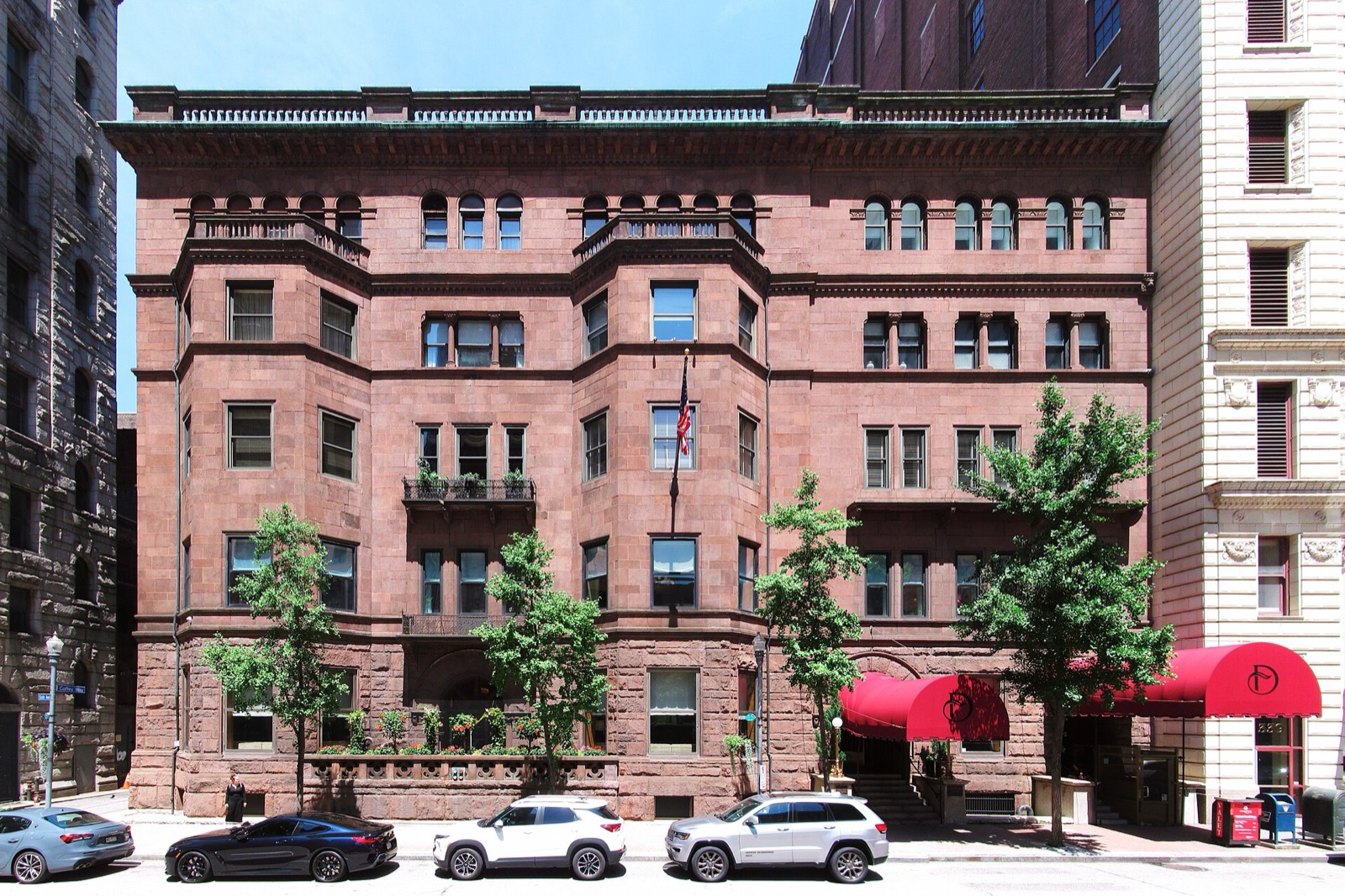
 Duquesne Club
The club says what was once "a fraternity of prominent industrialists has evolved into a social and business retreat for the region's most interesting thinkers and innovative…
The Rainier Club
The club describes its members as founders, freelancers, entrepreneurs and executives, and markets separate tiers to residents of the Seattle area, to people under 40, and to…
What the records say
- Maximum age at joining: Duquesne Club: No published maximum age at joining; The Rainier Club: Under 40 Membership is for members aged 18 to 39.
- Minimum age: Duquesne Club: No published minimum age; The Rainier Club: Resident Membership is for members aged 40 and over.
- Geographic restriction: Duquesne Club: No published geographic restriction; The Rainier Club: Non-Resident Membership requires living and working outside a 50-mile radius of the club.
- Annual dues: Duquesne Club: Not publicly disclosed; The Rainier Club: All three tiers publish both an initiation fee and dues. Resident and Under 40 dues are billed monthly; non-resident dues are billed quarterly..
Side by side
| Duquesne Club | The Rainier Club | |
|---|---|---|
| Profile | ||
| Type | Private club | Private club |
| Founded | 1873 (The club's history page dates its founding to 1873 as a "voluntary association" first led by President John H. Ricketson.) | 1888 (The club describes itself as "a storied social club since 1888" and as Seattle's oldest private social club. Secondary accounts date the founding meeting to 25 July 1888, following a proposal on 23 February 1888.) |
| Headquarters | Pittsburgh, United States | Seattle, United States |
| Geographic footprint | Single clubhouse at 325 Sixth Avenue in downtown Pittsburgh | Single clubhouse at 820 4th Avenue in downtown Seattle |
| Members | Not publicly disclosed by the club. Wikipedia's article gives approximately 2,700 men and women, a figure it dates to 2007; that has not been independently verified. | Not publicly disclosed |
| Chapters | Single clubhouse; no chapters | Single clubhouse; no chapters |
| Primary audience | The club says what was once "a fraternity of prominent industrialists has evolved into a social and business retreat for the region's most interesting thinkers and innovative leaders in business, industry, finance, politics, education, philanthropy, law, medicine and the arts". | The club describes its members as founders, freelancers, entrepreneurs and executives, and markets separate tiers to residents of the Seattle area, to people under 40, and to non-residents living and working more than 50 miles from the club. |
| Typical member | Not publicly disclosed in numbers. The club describes members as regional leaders across business, finance, law, medicine, education, politics, philanthropy and the arts. | Members are Seattle-area business, professional and civic people, with a distinct under-40 tier and a non-resident tier. The club publishes no membership total or occupational breakdown. |
| Qualification | ||
| Maximum age at joining | No published maximum age at joining | Under 40 Membership is for members aged 18 to 39A separate resident tier applies from age 40verified September 2026 · source ↗ |
| Minimum age | No published minimum age | Resident Membership is for members aged 40 and overMembers aged 18 to 39 join the Under 40 tier at a lower rateverified September 2026 · source ↗ |
| Geographic restriction | No published geographic restriction | Non-Resident Membership requires living and working outside a 50-mile radius of the clubNon-resident members receive a complimentary Palmer Advantage golf and travel membershipverified September 2026 · source ↗ |
| Invitation required | Yes | No |
| Sponsor required | Not documented | Not documented |
| Application process | No application process is published. The club's membership pages describe benefits rather than admission, and there is no application form or membership contact on the public site. | Prospective members schedule a clubhouse tour through the club's website or membership office and are then quoted the published tier rate for their age and location. The club does not publish a sponsorship, proposal or ballot requirement, nor a review committee. |
| Selectivity | Not publicly disclosed | Not publicly disclosed. The club publishes prices and tiers but no acceptance criteria, waiting list or approval process. |
| Cost | ||
| Annual dues | Not publicly disclosedverified September 2026 · source ↗ | All three tiers publish both an initiation fee and dues. Resident and Under 40 dues are billed monthly; non-resident dues are billed quarterly. |
| Monthly dues | The club publishes no fee information and no reliable published reporting of a figure was located. | $575 a monthResident Membership, age 40 and oververified September 2026 · source ↗ |
| Initiation fee | Not publicly disclosedverified September 2026 · source ↗ | $4,000 one-timeResident Membership, age 40 and over. No-APR financing of the initiation fee is available for up to one year under contract, with conditions.verified September 2026 · source ↗ |
| Membership term | Not documented | Monthly dues for resident and under-40 members; quarterly dues for non-resident members |
| Structure | ||
| Meeting frequency | No published meeting programme beyond a member events calendar; the six special-interest societies run their own tastings, dinners, classes, tours and outings | More than 400 member and signature events a year; clubhouse and gym accessible 24 hours |
| Peer forums | Six member-run special-interest societies: Wine (about 300 members), Art, Rod & Gun, Literary, Culinary and Beer | Not documented |
| Confidentiality | Not publicly disclosed | Not publicly disclosed |
| Time commitment | Not documented | Not documented |
| Organized as | Clubhouse premises, Event-focused | Clubhouse premises, Event-focused |
| Confidential peer forums | No | No |
| Local chapters | No | No |
| Virtual membership | No | No |
| Online community | No | No |
| Member directory | Not documented | Not documented |
| Events | Yes | Yes |
| Programming | ||
| Educational programming | Partial | Partial |
| Leadership development | No | Partial |
| Retreats | No | No |
| Travel | Yes | Yes |
| Family programming | Yes | Not documented |
| Spouse and partner programming | Not documented | Yes |
| Next-generation programming | Not documented | Yes |
| Investment discussions | No | No |
| Investment opportunities | No | No |
| Philanthropic component | Yes | Partial |
| Networking emphasis | High | High |
| Social emphasis | High | High |
Next
Sources
Drawn from the sources listed on each page: Duquesne Club · The Rainier Club