Comparison · 3 material differences
The Chicago Club vs Cosmos Club
This comparison was generated on request from the records. It carries no editorial verdict and is not indexed. The published comparisons are listed on the compare page.
Read down each column for one organization, across a row for the difference. A bronze mark at the left of a cell means the organizations differ on that row. A dash or “not published” means the organization does not disclose the fact — it is not a zero.
What the records say
- Annual dues — The Chicago Club: Not publicly disclosed. The only figure on record is historic: Wikipedia states that membership cost $100 when the club was founded in 1869; Cosmos Club: The club publishes no dues figure. Wikipedia reports annual dues of approximately $2,000 as of 2015; not independently verified and likely out of date.
Side by side
| The Chicago Club | Cosmos Club | |
|---|---|---|
| Profile | ||
| Type | Private club | Private club |
| Founded | 1869 (Wikipedia dates the founding to January 1869 by former members of the Dearborn Club, with Philip Wadsworth as first president and a first meeting on 1 May 1869; the club's own public site carries no history page.) | 1878 (The club states it has "provided a prestigious environment for intellectual fellowship since 1878"; it was organised by John Wesley Powell and a circle of Washington scientists after Clarence Dutton asked why Washington had no club like the Century.) |
| Headquarters | Chicago, United States | Washington, United States |
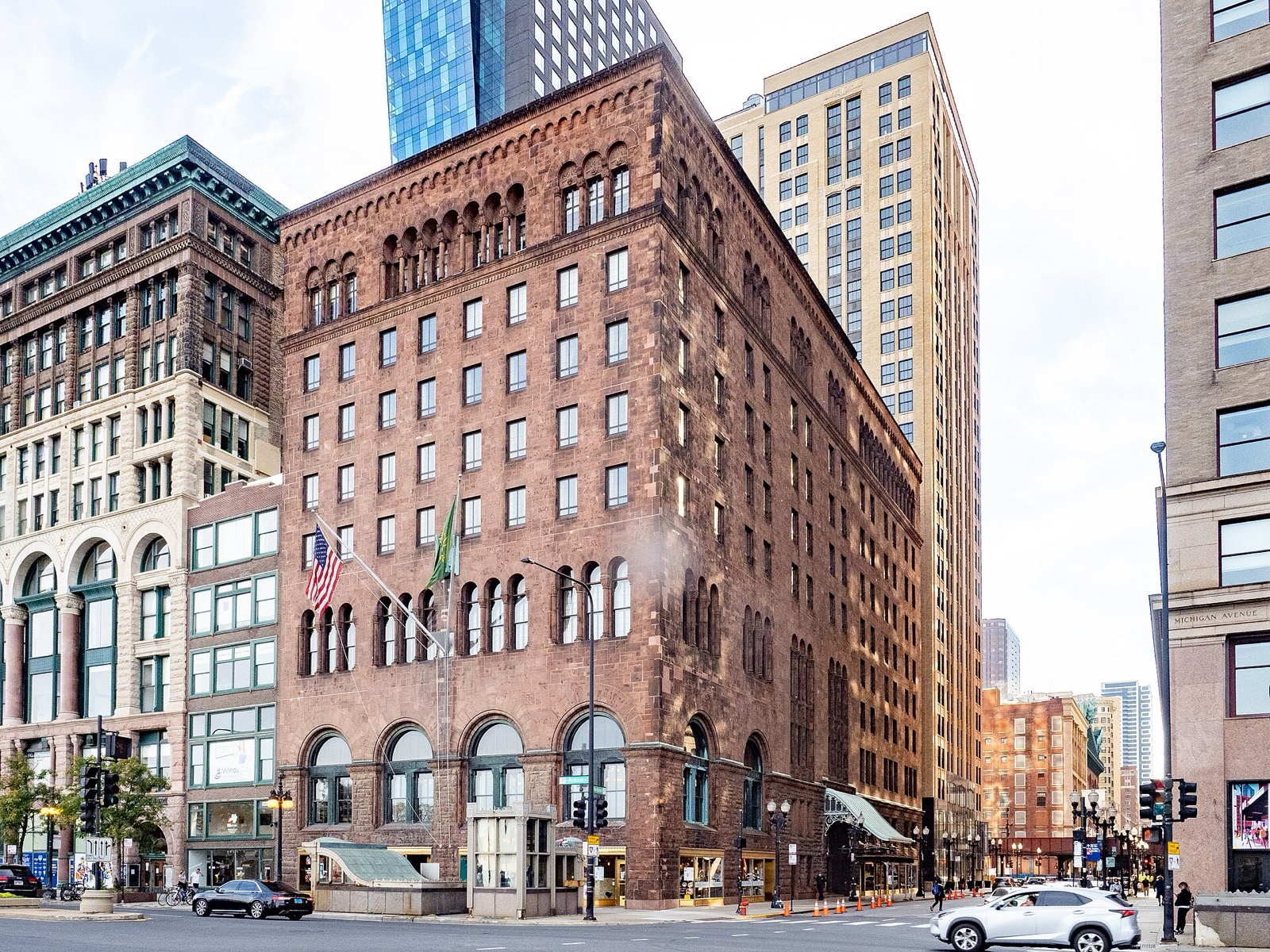
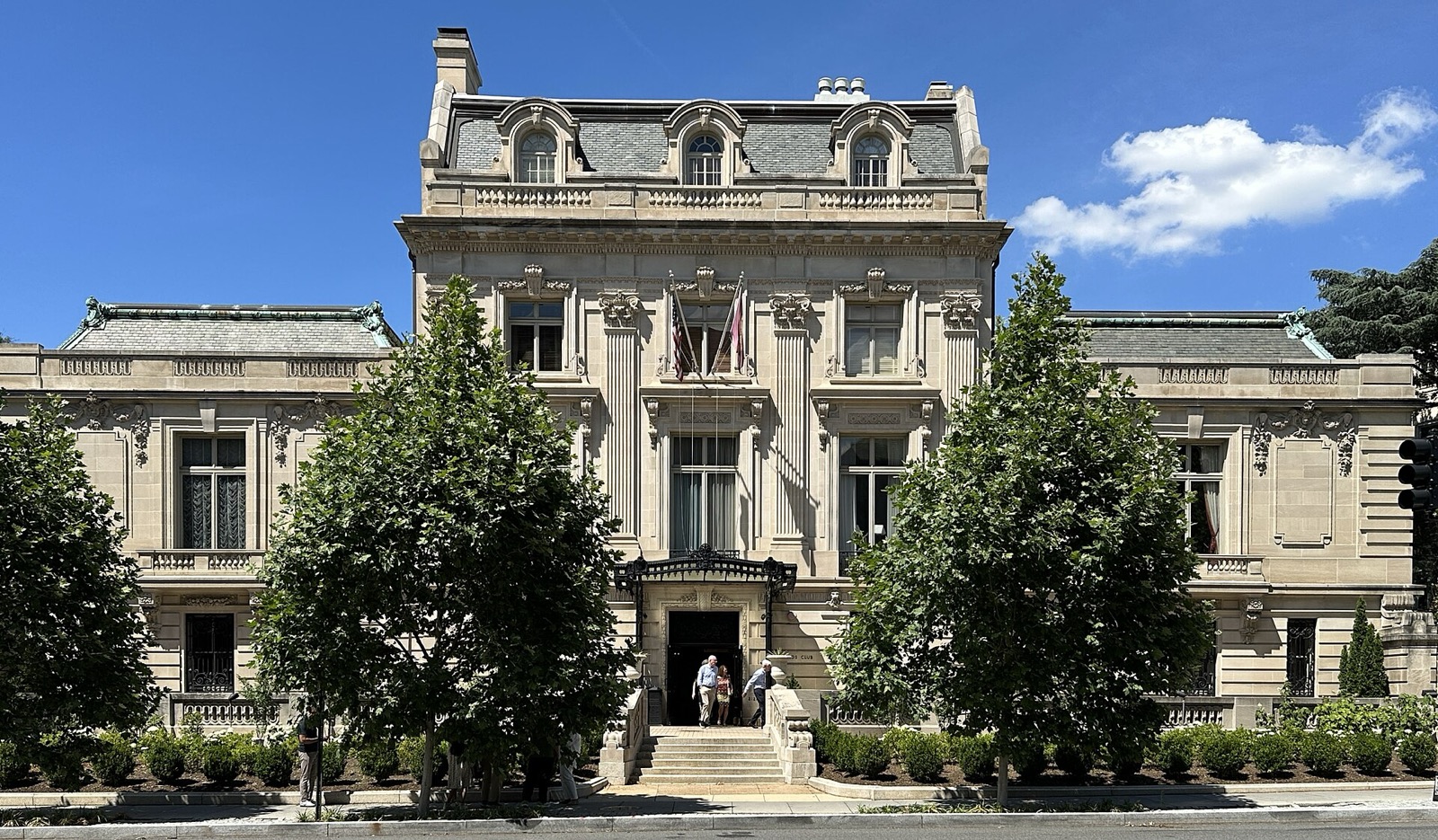
| Geographic footprint | Single clubhouse at 81 East Van Buren Street at Michigan Avenue, in the Loop | Single clubhouse in the Townsend House at 2121 Massachusetts Avenue NW, Washington DC, with the adjoining Hillyer House and an annex |
| Members | Not publicly disclosed by the club. Wikipedia gives approximately 1,200 members; that has not been independently verified and carries no current date. | Not publicly disclosed by the club. Wikipedia gives approximately 3,089 members across full, junior, senior and emeritus categories as of 2017; that has not been independently verified. |
| Chapters | Single clubhouse; no chapters | Single clubhouse; no chapters |
| Primary audience | Not publicly disclosed. The club's membership page consists of one sentence stating that membership is by invitation only, plus a contact for the Director of Membership. | The club describes itself as "a private Washington, D.C. social club for individuals distinguished in science, literature, the arts, learned professions, or public service" and says that to become a member "an individual must demonstrate distinction in their prospective artistic, scientific, literary, public service, or professional career". |
| Typical member | Not publicly disclosed. Wikipedia records that charter members included Anson Stager, Robert Todd Lincoln, Potter Palmer, Marshall Field and George Pullman, but the club publishes nothing about its present membership. | Members are people with a record of distinction in science, literature, the arts, a learned profession or public service. The club says its members have included three US presidents, two vice-presidents, 14 Supreme Court justices, 36 Nobel Prize winners, 61 Pulitzer Prize winners and 55 recipients of the Presidential Medal of Freedom. |
| Qualification | ||
| Invitation required | Yes | Not documented |
| Sponsor required | Not documented | Not documented |
| Application process | There is no public application route. The club states that membership is by invitation only and directs enquiries about membership requirements to its Director of Membership by email. | No application process is published. The club states the standard candidates must meet -- demonstrated distinction in a career in the arts, sciences, literature, public service or a profession -- but publishes no nomination procedure, application form, membership contact or timetable. |
| Selectivity | Not publicly disclosed | Not publicly disclosed |
| Cost | ||
| Annual dues | Not publicly disclosed. The only figure on record is historic: Wikipedia states that membership cost $100 when the club was founded in 1869verified September 2026 · source ↗ | The club publishes no dues figure. Wikipedia reports annual dues of approximately $2,000 as of 2015; not independently verified and likely out of dateverified September 2026 · source ↗ |
| Initiation fee | Not publicly disclosedverified September 2026 · source ↗ | Not publicly disclosedverified September 2026 · source ↗ |
| Membership term | Not documented | Not documented |
| Structure | ||
| Meeting frequency | No published programme; the clubhouse operates for dining, meetings, events and accommodation | A continuous programme of lectures, concerts, literary conversations, study groups, wine tastings, brunches and dinner dances, listed on a members-only calendar |
| Peer forums | Not documented | Member study groups and committees, including an American History Study Group, Civil War group, Art Committee and Associates luncheons, appear on the club's public events calendar |
| Confidentiality | Cell phone use for voice communication is limited to phone booths, private meeting rooms and guest rooms; discreet non-verbal use such as texting and web browsing is permitted throughout the club. | Not publicly disclosed. The club publishes a cell phones and electronics policy rather than a confidentiality rule. |
| Time commitment | Not documented | Not documented |
| Organized as | Clubhouse premises, Event-focused | Clubhouse premises, Event-focused |
| Confidential peer forums | No | No |
| Local chapters | No | No |
| Virtual membership | No | No |
| Online community | No | No |
| Member directory | Not documented | Not documented |
| Events | Yes | Yes |
| Programming | ||
| Educational programming | Not documented | Yes |
| Leadership development | No | No |
| Retreats | No | No |
| Travel | Partial | Yes |
| Family programming | Not documented | Partial |
| Spouse and partner programming | Not documented | Not documented |
| Next-generation programming | Not documented | Not documented |
| Investment discussions | No | No |
| Investment opportunities | No | No |
| Philanthropic component | Partial | Partial |
| Networking emphasis | Medium | Medium |
| Social emphasis | High | High |
Next
Last verified: not yet reviewed
Report an error on this page
Sources
Drawn from the sources listed on each page: The Chicago Club · Cosmos Club