Private club · Business clubs · Members' clubs
The Chicago Club
Not publicly disclosed. The club's membership page consists of one sentence stating that membership is by invitation only, plus a contact for the Director of Membership.
A profile page holds what the organization publishes and what named sources report: who it admits, what it costs, how it is structured, where it operates, and how it has changed. Every figure carries the date it was checked. A dash means the organization does not publish that fact.
Founding — Wikipedia dates the founding to January 1869 by former members of the Dearborn Club, with Philip Wadsworth as first president and a first meeting on 1 May 1869; the club's own public site carries no history page.
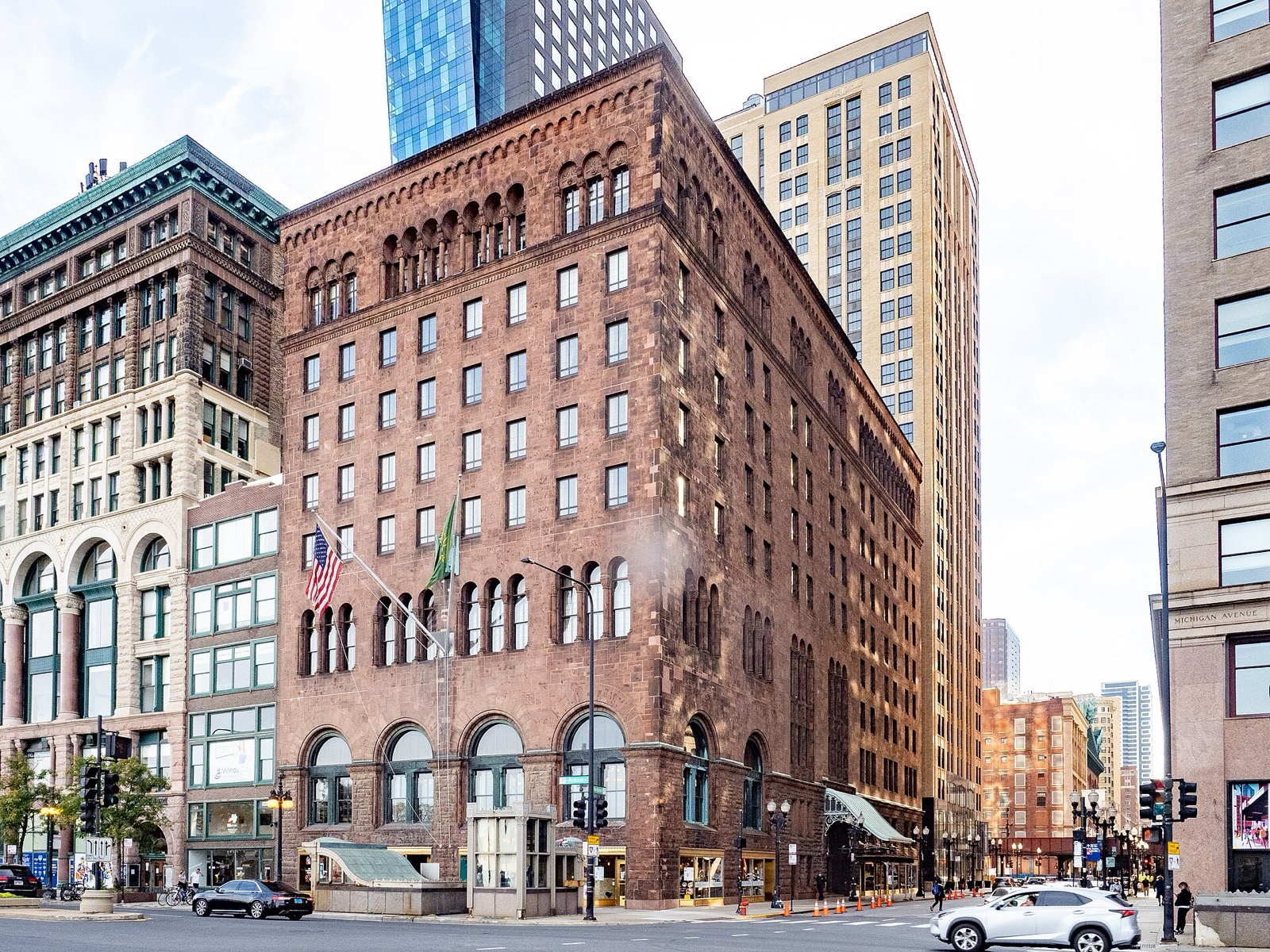
The Chicago Club is a private city club at 81 East Van Buren Street in the Loop, founded in January 1869 by former members of the Dearborn Club. It lost its first home in the Great Chicago Fire of 1871 and moved several times before occupying a Burnham and Root building -- originally built for the Art Institute of Chicago -- from 1893. The present eight-storey granite Romanesque Revival clubhouse, designed by Alfred Hoyt Granger and John Carlisle Bollenbacher, dates from 1929 and was listed on the National Register of Historic Places in 2005. The club runs dining rooms including The Grill, a lounge, overnight rooms, private office suites and catering and event space, and supports the building through a separate Chicago Club Preservation Foundation, a 501(c)(3) established in 2007 and funded by member donations. Its published membership policy is a single line: membership is by invitation only, with enquiries directed to the Director of Membership. No eligibility criteria, application process, fee schedule or member count is published. What is published in detail is the club's four-tier dress code and a rule confining voice calls to phone booths, private meeting rooms and guest rooms.
How it works
Members use one clubhouse in the Loop for dining, meetings, private events, overnight stays and private office suites. Valet parking is complimentary for members during the day, with a $25 overnight rate; registered overnight hotel guests pay $50. Building preservation is handled through the separately incorporated Chicago Club Preservation Foundation. The club appears on other clubs' reciprocal lists, including the Duquesne Club's, but publishes no reciprocal directory of its own.
Typical member
Not publicly disclosed. Wikipedia records that charter members included Anson Stager, Robert Todd Lincoln, Potter Palmer, Marshall Field and George Pullman, but the club publishes nothing about its present membership.
Membership requirements
Requirements in detail, with history →Requirements are the tests the organization itself publishes — an age ceiling, a company-revenue floor, a net-worth minimum, a role. Where a figure straddles a range, the organization's own assessment decides. Local chapters can apply stricter tests than the published standard.
| Criterion | Published requirement | Provenance |
|---|---|---|
| Invitation | Membership in The Chicago Club is by invitation only | Verified September 2026High confidenceSource ↗ |
| Other criterion | Members and guests must observe a four-tier dress code (Business Casual, The Grill, Club Casual and Formal); untucked shirts, athletic shoes, hats indoors, shorts, T-shirts and jean jackets are never allowed | Verified September 2026High confidenceSource ↗ |
Published criteria as verified on the dates shown. Final eligibility and admission decisions belong entirely to The Chicago Club. See how you compare against these criteria →
Initiation fees are paid once on joining; dues recur. Chapter dues, retreats, travel and events are usually additional and are listed separately when the organization discloses them. Figures are as published or reported on the date shown — not quotations.
| Cost | First year | Three years | Provenance | |
|---|---|---|---|---|
| Annual dues | Not publicly disclosed. The only figure on record is historic: Wikipedia states that membership cost $100 when the club was founded in 1869 | Source ↗ | ||
| Initiation fee | Not publicly disclosed | Source ↗ | ||
| Other costonce | $38 | $38 | Verified September 2026High confidenceSource ↗ | |
| Estimated total, disclosed figures only | $38 | $38 | Not counted: Annual dues, Initiation fee. | |
Structure and programming
Independent context
The Chicago Club states its admission rule more plainly than most peers -- invitation only, full stop -- and then stops. There is no eligibility statement, no proposer-and-seconder description, no fee schedule and no member count, so any figure circulating online should be treated as unverified; Wikipedia's approximately 1,200 members is the only one in general circulation and carries no date. The published dress code is worth reading before visiting: four separate standards apply in different rooms, and the club bans untucked shirts, athletic shoes and jean jackets outright while permitting conservative denim only under the Club Casual standard. The Preservation Foundation is a useful signal of how the club funds capital work: rather than assessing members directly for the granite facade or the fire systems, it solicits tax-deductible gifts through a separate charity.
Editorial analysis by Peer Group Guide editors. It is separated from the record above and follows the editorial policy.
Similar organizations
Alternatives, grouped by need →History and changes
Site-wide change log →- milestoneClub founded by former members of the Dearborn Club, which had been shut down by the Cook County Sheriff in 1868; Philip Wadsworth was first president and membership cost $100… ↗
- milestoneFirst clubhouse, the Farnam mansion on Michigan Avenue, destroyed in the Great Chicago Fire, per Wikipedia ↗
- milestoneFirst permanent home opened on Monroe Street, per Wikipedia ↗
- milestoneClub moved into the Burnham and Root building originally erected for the Art Institute of Chicago, per Wikipedia ↗
- milestonePresent eight-storey granite Romanesque Revival clubhouse by Alfred Hoyt Granger and John Carlisle Bollenbacher opened at 81 East Van Buren Street, per Wikipedia ↗
- milestoneClubhouse listed on the National Register of Historic Places, per Wikipedia ↗
- milestoneThe Chicago Club Preservation Foundation established as a 501(c)(3) to preserve the clubhouse, funded by member donations ↗
Milestones as published by the organization or reported by a named source. “Record” entries are changes to this site’s own record of the organization, kept in the public change log rather than overwritten.
Take the next step
Check how you compare
Run the published criteria against a profile given in ranges. Nothing is stored.
Open the qualification toolRequest membership information
We pass on only what you agree to share, and only where the organization participates. You see exactly what is sent before you send it.
Request informationFollow this organization
One email when its requirements or fees change.
Sources
- The Chicago Club, The Chicago Club. Accessed 6 September 2026.tier 1
- Preservation Foundation - The Chicago Club, The Chicago Club. Accessed 6 September 2026.tier 1
- Reciprocal Clubs - Duquesne Club, Duquesne Club. Accessed 6 September 2026.tier 1
- Membership - The Chicago Club, The Chicago Club. Accessed 6 September 2026.tier 2
- Visiting The Club - The Chicago Club, The Chicago Club. Accessed 6 September 2026.tier 2
- Chicago Club - Nonprofit Explorer, ProPublica (IRS Form 990 data). Accessed 6 September 2026.tier 5
- Chicago Club, Wikipedia. Accessed 6 September 2026.tier 8
Source tiers follow the published hierarchy: 1 official site · 2 official membership materials · 3 application documents · 4 annual reports · 5 government filings · 6 reliable business publications · 7 credible interviews · 8 other reputable secondary sources. Sources and data policy.
Is something wrong or out of date?
Represent The Chicago Club? Verified representatives can submit corrections to fees, criteria, chapters and contact details, and add approved material. Submissions are reviewed by an editor and shown as organization-supplied; they never overwrite independent research.