Private club · Business clubs · Members' clubs
Duquesne Club
The club says what was once "a fraternity of prominent industrialists has evolved into a social and business retreat for the region's most interesting thinkers and innovative leaders in business, industry, finance, politics, education, philanthropy, law, medicine and the arts".
A profile page holds what the organization publishes and what named sources report: who it admits, what it costs, how it is structured, where it operates, and how it has changed. Every figure carries the date it was checked. A dash means the organization does not publish that fact.
Founding: The club's history page dates its founding to 1873 as a "voluntary association" first led by President John H. Ricketson.
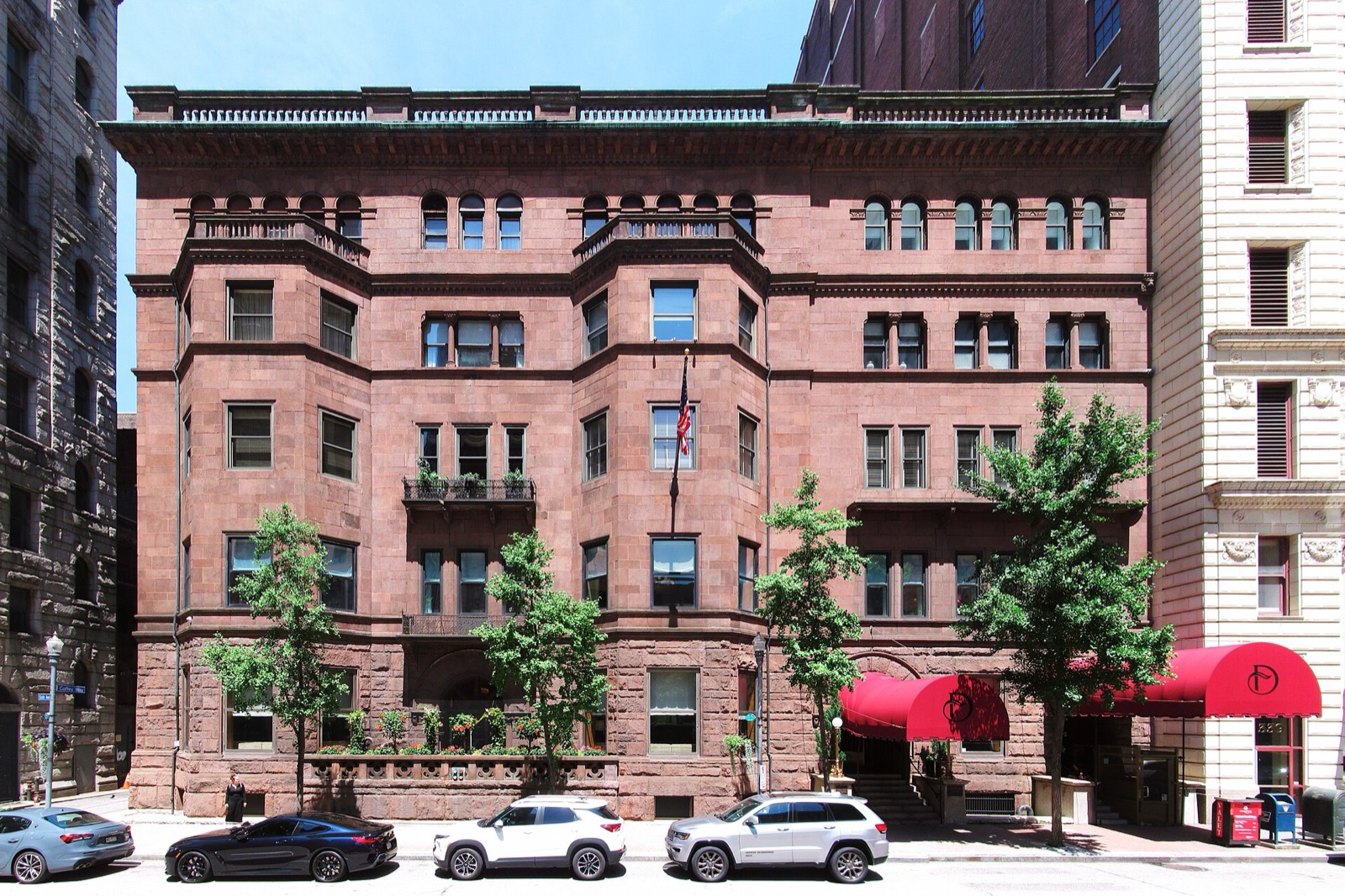
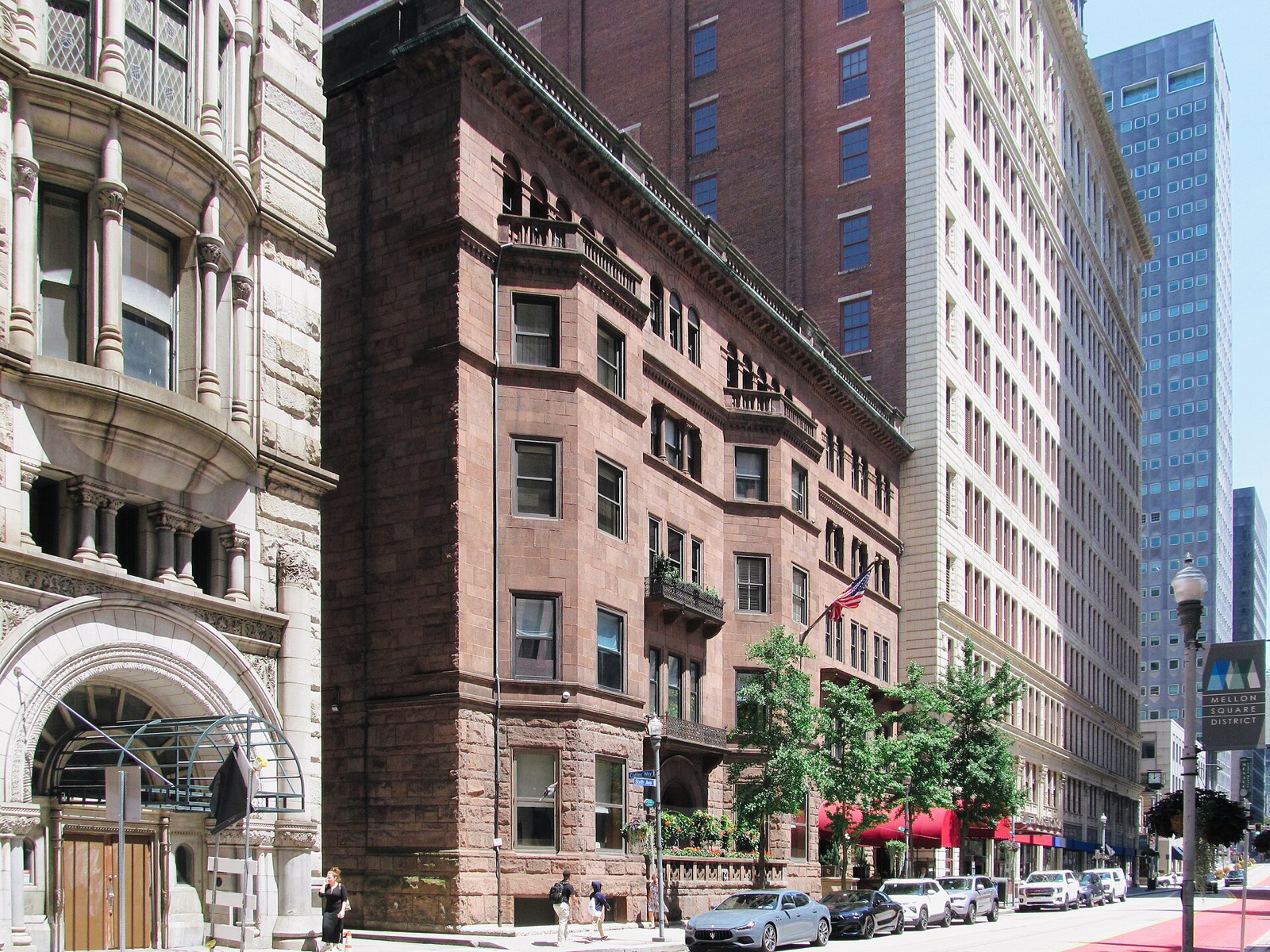
The Duquesne Club is a private city club at 325 Sixth Avenue in downtown Pittsburgh, founded in 1873 and housed since 1890 in a Richardsonian Romanesque clubhouse designed by Longfellow, Alden & Harlow, with a 1931 addition by Janssen & Cocken. It combines a la carte and private dining rooms, bars and a wine cellar with 43 hotel rooms and suites, meeting and conference space, a barber shop and a health and fitness centre. Member life is organised partly through six special-interest societies covering wine, art, rod and gun, literature, cuisine and beer; the club says its Wine Society, with 300 members, has the largest enrolment of any private club wine society in the United States. The club publishes a reciprocal directory of 20 clubs in the United States, Australia, England and Ireland, and reciprocal visits require a letter of introduction issued for each trip. It publishes no membership criteria, application process, fee schedule or member count; Wikipedia reports that membership is by invitation from an existing member and that the club first voted to admit women in 1980.
How it works
Members use one downtown clubhouse for dining, private events, fitness, meetings and overnight stays, and join special-interest societies covering wine, art, field sports, literature, cuisine and beer. The club is a member of Distinguished Clubs of the World and publishes a reciprocal list of 20 clubs: The California Club and The Olympic Club in California; The Chicago Club and University Club of Chicago; Harvard Club of Boston; Detroit Athletic Club; Minneapolis Club; The Metropolitan Club, New York Athletic Club, The University Club of New York and The Yale Club in New York City; The Union Club of Cleveland; The Union League of Philadelphia; The Rainier Club in Seattle; the Cosmos Club and The Metropolitan Club of the City of Washington in Washington DC; the Melbourne Club; the Royal Automobile Club in London; and the Kildare Street and University Club in Dublin. Each reciprocal visit requires a letter of introduction from the club.
Typical member
Not publicly disclosed in numbers. The club describes members as regional leaders across business, finance, law, medicine, education, politics, philanthropy and the arts.
Membership requirements
Requirements in detail, with history →Requirements are the tests the organization itself publishes: an age ceiling, a company-revenue floor, a net-worth minimum, a role. Where a figure straddles a range, the organization's own assessment decides. Local chapters can apply stricter tests than the published standard.
| Criterion | Published requirement | Provenance |
|---|---|---|
| Invitation | Wikipedia states that membership is by invitation from an existing member only | Verified September 2026Low confidenceSource ↗ |
| Other criterion | No eligibility criteria are published by the club | Verified September 2026High confidenceSource ↗ |
Published criteria as verified on the dates shown. Final eligibility and admission decisions belong entirely to Duquesne Club. See how you compare against these criteria →
Initiation fees are paid once on joining; dues recur. Chapter dues, retreats, travel and events are usually additional and are listed separately when the organization discloses them. Figures are as published or reported on the date shown, not quotations.
| Cost | First year | Three years | Provenance |
|---|---|---|---|
| Annual dues | Not publicly disclosed | Source ↗ | |
| Initiation fee | Not publicly disclosed | Source ↗ | |
Structure and programming
Independent context
The Duquesne Club is candid about what it is -- a business and social club for Pittsburgh's establishment -- and silent about how one joins. There is no membership page in the ordinary sense: the section labelled Membership describes amenities, events, societies and reciprocal clubs, but never eligibility, sponsorship or price. That makes the club hard to assess from outside, and the widely repeated membership figure of about 2,700 traces to Wikipedia rather than the club. The published reciprocal list is genuinely useful and unusually specific for a club of this type, and the six societies are the clearest published signal of how members actually spend time there. Anyone weighing it against the other large city clubs should note the on-site hotel, which several peer clubs do not have at this scale.
Editorial analysis by Peer Group Guide editors. It is separated from the record above and follows the editorial policy.
Similar organizations
Alternatives, grouped by need →History and changes
Site-wide change log →- milestoneClub founded as a voluntary association, first led by President John H. Ricketson ↗
- milestoneClub leased a brick house on its present Sixth Avenue site ↗
- milestoneRichardsonian Romanesque clubhouse opened; Wikipedia attributes the design to Longfellow, Alden & Harlow ↗
- milestoneAddition by Janssen & Cocken added a garden patio, barber shop and kitchens, per Wikipedia ↗
- milestoneDesignated a Pittsburgh landmark, per Wikipedia ↗
- milestoneMembers voted to admit women for the first time, per Wikipedia ↗
- milestoneFitness centre added, per Wikipedia ↗
- milestoneAdded to the National Register of Historic Places, per Wikipedia ↗
Milestones as published by the organization or reported by a named source. “Record” entries are changes to this site’s own record of the organization, kept in the public change log rather than overwritten.
Take the next step
Check how you compare
Run the published criteria against a profile given in ranges. Nothing is stored.
Open the qualification toolRequest membership information
We pass on only what you agree to share, and only where the organization participates. You see exactly what is sent before you send it.
Request informationFollow this organization
One email when its requirements or fees change.
Sources
- Duquesne Club, Duquesne Club. Accessed 6 September 2026.tier 1
- About - Duquesne Club, Duquesne Club. Accessed 6 September 2026.tier 1
- History - Duquesne Club, Duquesne Club. Accessed 6 September 2026.tier 1
- Visitors - Duquesne Club, Duquesne Club. Accessed 6 September 2026.tier 1
- Societies - Duquesne Club, Duquesne Club. Accessed 6 September 2026.tier 1
- Reciprocal Clubs - Duquesne Club, Duquesne Club. Accessed 6 September 2026.tier 1
- Membership - Duquesne Club, Duquesne Club. Accessed 6 September 2026.tier 2
- Duquesne Club - Nonprofit Explorer, ProPublica (IRS Form 990 data). Accessed 6 September 2026.tier 5
- Duquesne Club, Wikipedia. Accessed 6 September 2026.tier 8
Source tiers follow the published hierarchy: 1 official site · 2 official membership materials · 3 application documents · 4 annual reports · 5 government filings · 6 reliable business publications · 7 credible interviews · 8 other reputable secondary sources. Sources and data policy.
Is something wrong or out of date?
Represent Duquesne Club? Verified representatives can submit corrections to fees, criteria, chapters and contact details, and add approved material. Submissions are reviewed by an editor and shown as organization-supplied; they never overwrite independent research.