Club privado · Clubes empresariales · Clubes de socios
Duquesne Club
The club says what was once "a fraternity of prominent industrialists has evolved into a social and business retreat for the region's most interesting thinkers and innovative leaders in business, industry, finance, politics, education, philanthropy, law, medicine and the arts".
Una página de perfil recoge lo que la organización publica y lo que informan fuentes identificadas: a quién admite, cuánto cuesta, cómo está estructurada, dónde opera y cómo ha evolucionado. Cada cifra lleva la fecha en que fue verificada. Un guion significa que la organización no publica ese dato.
Fundación: The club's history page dates its founding to 1873 as a "voluntary association" first led by President John H. Ricketson.
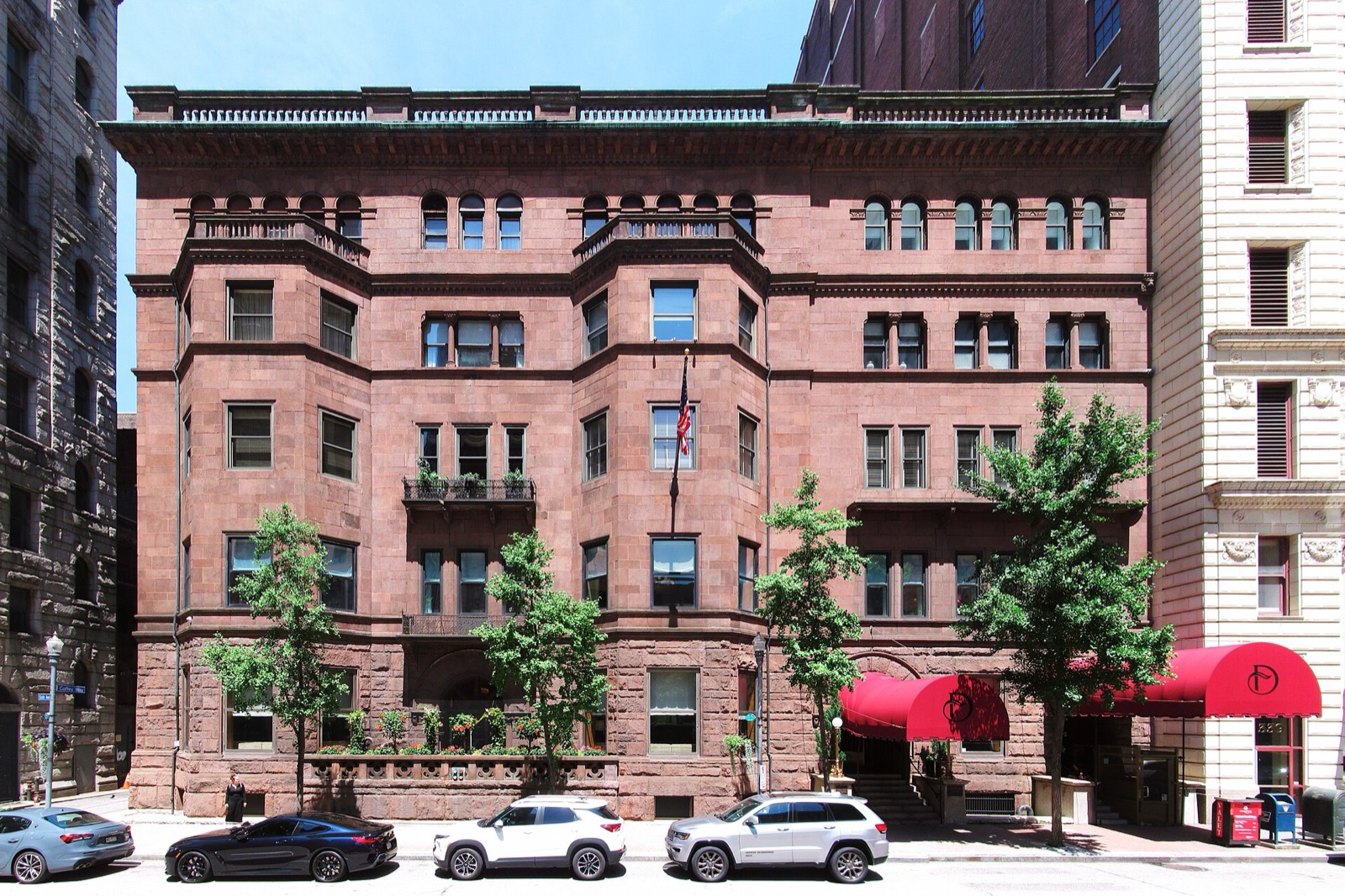
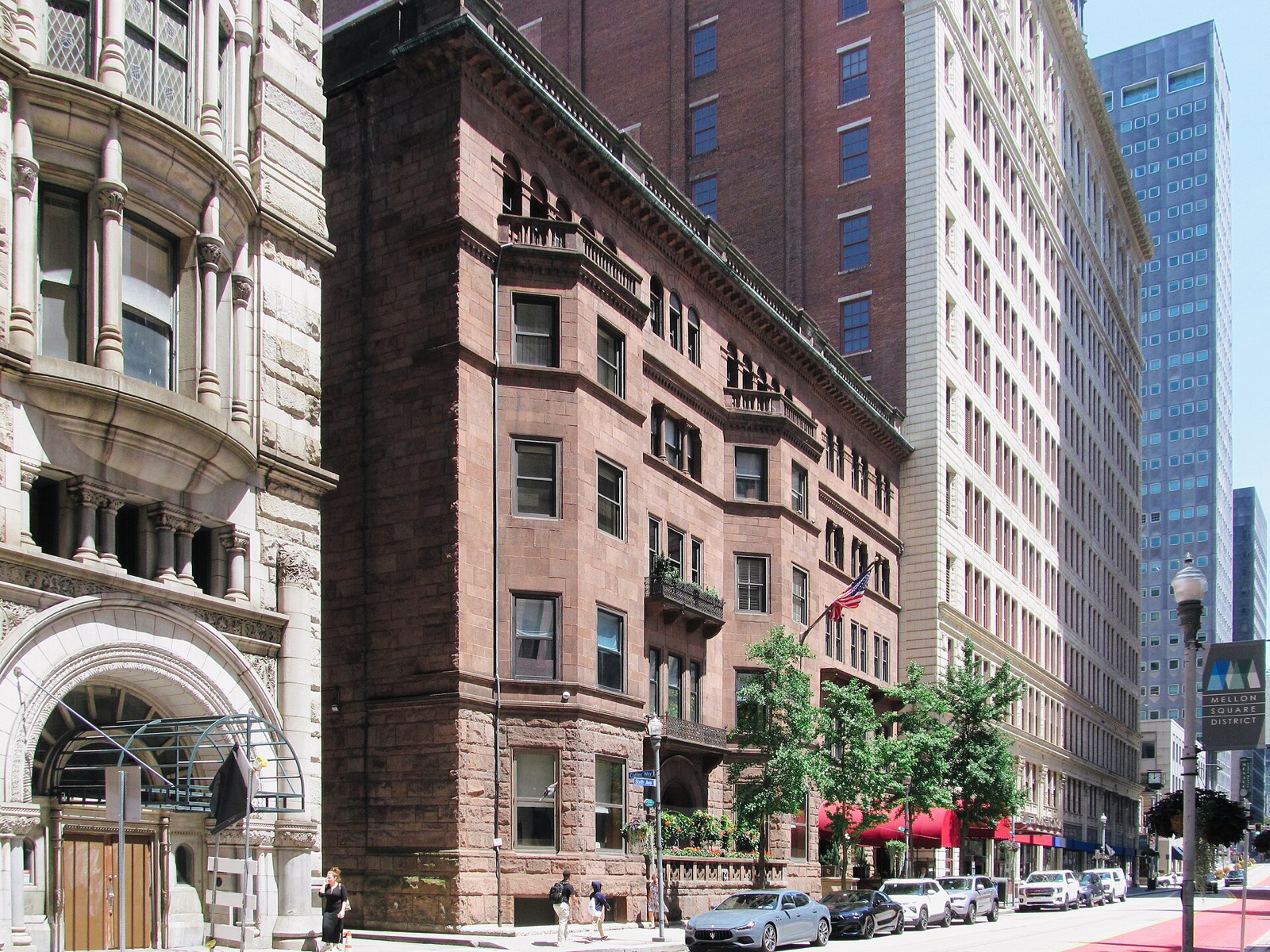
The Duquesne Club is a private city club at 325 Sixth Avenue in downtown Pittsburgh, founded in 1873 and housed since 1890 in a Richardsonian Romanesque clubhouse designed by Longfellow, Alden & Harlow, with a 1931 addition by Janssen & Cocken. It combines a la carte and private dining rooms, bars and a wine cellar with 43 hotel rooms and suites, meeting and conference space, a barber shop and a health and fitness centre. Member life is organised partly through six special-interest societies covering wine, art, rod and gun, literature, cuisine and beer; the club says its Wine Society, with 300 members, has the largest enrolment of any private club wine society in the United States. The club publishes a reciprocal directory of 20 clubs in the United States, Australia, England and Ireland, and reciprocal visits require a letter of introduction issued for each trip. It publishes no membership criteria, application process, fee schedule or member count; Wikipedia reports that membership is by invitation from an existing member and that the club first voted to admit women in 1980.
Cómo funciona
Members use one downtown clubhouse for dining, private events, fitness, meetings and overnight stays, and join special-interest societies covering wine, art, field sports, literature, cuisine and beer. The club is a member of Distinguished Clubs of the World and publishes a reciprocal list of 20 clubs: The California Club and The Olympic Club in California; The Chicago Club and University Club of Chicago; Harvard Club of Boston; Detroit Athletic Club; Minneapolis Club; The Metropolitan Club, New York Athletic Club, The University Club of New York and The Yale Club in New York City; The Union Club of Cleveland; The Union League of Philadelphia; The Rainier Club in Seattle; the Cosmos Club and The Metropolitan Club of the City of Washington in Washington DC; the Melbourne Club; the Royal Automobile Club in London; and the Kildare Street and University Club in Dublin. Each reciprocal visit requires a letter of introduction from the club.
Miembro tipo
Not publicly disclosed in numbers. The club describes members as regional leaders across business, finance, law, medicine, education, politics, philanthropy and the arts.
Requisitos de membresía
Requisitos en detalle, con historial →Los requisitos son los criterios que la propia organización publica: un límite de edad, un umbral mínimo de ingresos de la empresa, un patrimonio neto mínimo, una función. Cuando una cifra abarca un rango, es la propia organización quien decide. Los capítulos locales pueden aplicar criterios más estrictos que el estándar publicado.
| Criterio | Requisito publicado | Procedencia |
|---|---|---|
| Invitación | Wikipedia states that membership is by invitation from an existing member only | Verificado September 2026Confianza bajaFuente ↗ |
| Otro criterio | No eligibility criteria are published by the club | Verificado September 2026Alta confianzaFuente ↗ |
Criterios publicados verificados en las fechas indicadas. Las decisiones definitivas sobre elegibilidad y admisión corresponden íntegramente a Duquesne Club. Vea cómo se compara con estos criterios →
Las cuotas de admisión se pagan una sola vez al incorporarse; las cuotas periódicas se repiten. Las cuotas de capítulo, los retiros, los viajes y los eventos suelen ser adicionales y se listan por separado cuando la organización los divulga. Las cifras corresponden a lo publicado o comunicado en la fecha indicada, no a cotizaciones.
| Costo | Primer año | Tres años | Procedencia |
|---|---|---|---|
| Cuotas anuales | Not publicly disclosed | Fuente ↗ | |
| Cuota de inscripción | Not publicly disclosed | Fuente ↗ | |
Estructura y programación
Contexto independiente
The Duquesne Club is candid about what it is -- a business and social club for Pittsburgh's establishment -- and silent about how one joins. There is no membership page in the ordinary sense: the section labelled Membership describes amenities, events, societies and reciprocal clubs, but never eligibility, sponsorship or price. That makes the club hard to assess from outside, and the widely repeated membership figure of about 2,700 traces to Wikipedia rather than the club. The published reciprocal list is genuinely useful and unusually specific for a club of this type, and the six societies are the clearest published signal of how members actually spend time there. Anyone weighing it against the other large city clubs should note the on-site hotel, which several peer clubs do not have at this scale.
Análisis editorial por Peer Group Guide editors. Está separado del registro anterior y sigue el política editorial.
Organizaciones similares
Alternativas, agrupadas por necesidad →Historial y cambios
Registro de cambios del sitio →- milestoneClub founded as a voluntary association, first led by President John H. Ricketson ↗
- milestoneClub leased a brick house on its present Sixth Avenue site ↗
- milestoneRichardsonian Romanesque clubhouse opened; Wikipedia attributes the design to Longfellow, Alden & Harlow ↗
- milestoneAddition by Janssen & Cocken added a garden patio, barber shop and kitchens, per Wikipedia ↗
- milestoneDesignated a Pittsburgh landmark, per Wikipedia ↗
- milestoneMembers voted to admit women for the first time, per Wikipedia ↗
- milestoneFitness centre added, per Wikipedia ↗
- milestoneAdded to the National Register of Historic Places, per Wikipedia ↗
Hitos publicados por la organización o reportados por una fuente identificada. Las entradas de tipo «Registro» corresponden a cambios en el propio registro de este sitio sobre la organización, conservados en el historial de cambios público en lugar de sobrescribirse.
Dé el siguiente paso
Compruebe cómo se compara
Aplique los criterios publicados a un perfil definido en rangos. Nada se almacena.
Abra la herramienta de cualificaciónSolicitar información sobre membresía
Solo transmitimos lo que usted acepta compartir, y únicamente cuando la organización participa. Usted ve exactamente qué se envía antes de enviarlo.
Solicitar informaciónSeguir esta organización
Un correo electrónico cuando cambien sus requisitos o cuotas.
Fuentes
- Duquesne Club, Duquesne Club. Consultado 6 September 2026.nivel 1
- About - Duquesne Club, Duquesne Club. Consultado 6 September 2026.nivel 1
- History - Duquesne Club, Duquesne Club. Consultado 6 September 2026.nivel 1
- Visitors - Duquesne Club, Duquesne Club. Consultado 6 September 2026.nivel 1
- Societies - Duquesne Club, Duquesne Club. Consultado 6 September 2026.nivel 1
- Reciprocal Clubs - Duquesne Club, Duquesne Club. Consultado 6 September 2026.nivel 1
- Membership - Duquesne Club, Duquesne Club. Consultado 6 September 2026.nivel 2
- Duquesne Club - Nonprofit Explorer, ProPublica (IRS Form 990 data). Consultado 6 September 2026.nivel 5
- Duquesne Club, Wikipedia. Consultado 6 September 2026.nivel 8
Los niveles de fuente siguen la jerarquía publicada: 1 sitio oficial · 2 materiales oficiales de membresía · 3 documentos de solicitud · 4 informes anuales · 5 registros gubernamentales · 6 publicaciones de negocios de confianza · 7 entrevistas acreditadas · 8 otras fuentes secundarias de reconocida solvencia. Fuentes y política de datos.
¿Hay algo incorrecto o desactualizado?
Representar Duquesne Club? Los representantes verificados pueden enviar correcciones sobre cuotas, criterios, capítulos y datos de contacto, y añadir material aprobado. Las aportaciones son revisadas por un editor y se muestran como información suministrada por la organización; nunca sobreescriben la investigación independiente.